How to Use an AI Tutor Without Just Copying the Answer
Master a 4-step study routine using visual AI tutors like Claryfied. Learn how to pause, predict, ask follow-ups, and build real STEM intuition.
Level: Middle School, High School, AP, College
In this guide
Quick answer
To use an AI tutor without cheating, treat it as a responsive coach: attempt the problem on paper first, watch the AI sketch the setup, pause before key calculation steps to predict the outcome, use click-to-ask follow-ups on confusing terms, and immediately solve an analogous problem independently.
The Danger of the 'Answer Dispenser' Trap
With AI tools readily available, it is tempting to paste a difficult homework question into a chatbot, copy the output onto your worksheet, and move on. While this finishes your assignment quickly, it creates an illusion of competence. When test day arrives and the AI is not there, students often freeze because their brain never formed the neural pathways required to initiate problem setup.
Research in cognitive science proves that genuine learning requires productive struggle. The goal is not to avoid help, but to use help in a way that coaches your own thinking. Visual AI tutors provide the ideal environment for this when used intentionally.
The 4-Step Active Learning Routine with Claryfied
Here is the proven study framework top STEM students use with Claryfied to achieve top grades:
- 1. Prime Your Brain (2 Minutes): Before opening Claryfied, sketch whatever you understand about the problem on scratch paper. Identify the exact roadblock: is it setting up the coordinate axes, selecting the kinematic equation, or balancing charges?
- 2. Watch the Setup & Hit Pause: Enter your question into Claryfied. Watch the tutor draw the initial diagram and state the givens. As soon as the first major concept appears, hit pause! Ask yourself: 'What equation or step should come next?'
- 3. Click to Ask Follow-Ups: If a specific symbol or vector is confusing, click that element directly on the Claryfied board. Claryfied allows you to ask focused follow-ups like 'Where did that factor of 1/2 come from?' without losing your place.
- 4. The Blank Paper Test: Once the lesson finishes, close the tab and solve a similar problem with different numbers on a blank sheet of paper. If you can replicate the derivation, the concept is yours forever.
How Claryfied's Interactive Features Support Active Study
Claryfied was specifically engineered to prevent passive watching. The lesson playback bar features distinct markers for each narration beat. You can step backward to re-hear a tricky derivation, inspect intermediate diagrams, and use Excalidraw's pen tool to write your own notes right beside the AI's drawings.
Furthermore, because Claryfied provides 5 free lessons for every new account, students can test this active study routine tonight on their most challenging assignment at zero cost.
What to remember
- Copying final answers from AI ruins test performance because it bypasses memory consolidation.
- Active prediction—pausing a whiteboard lesson to guess the next step—doubles conceptual retention.
- Targeted follow-ups ('Why did this force point downward?') build deeper mastery than asking for the full solution.
- Claryfied's interactive playback bar lets students pause, replay, and click elements for instant doubt clearance.
Frequently asked questions
Can teachers tell if I use an AI tutor?
If you copy answers verbatim, yes—teachers recognize standard AI phrasing. When you use Claryfied to understand the underlying visual principles, you write out the work in your own handwriting with complete conceptual comprehension.
What should I do if the AI tutor's method differs from my teacher's method?
This is a great learning opportunity! Pause the Claryfied lesson, compare the two approaches, and ask Claryfied: 'Can you show how this relates to my teacher's method?' Seeing multiple ways to solve a problem deepens mathematical flexibility.
Is Claryfied suitable for homeschooling parents?
Absolutely. Parents who are rusty on high school calculus, physics, or chemistry can let Claryfied explain the lesson at the board while parent and child learn together.
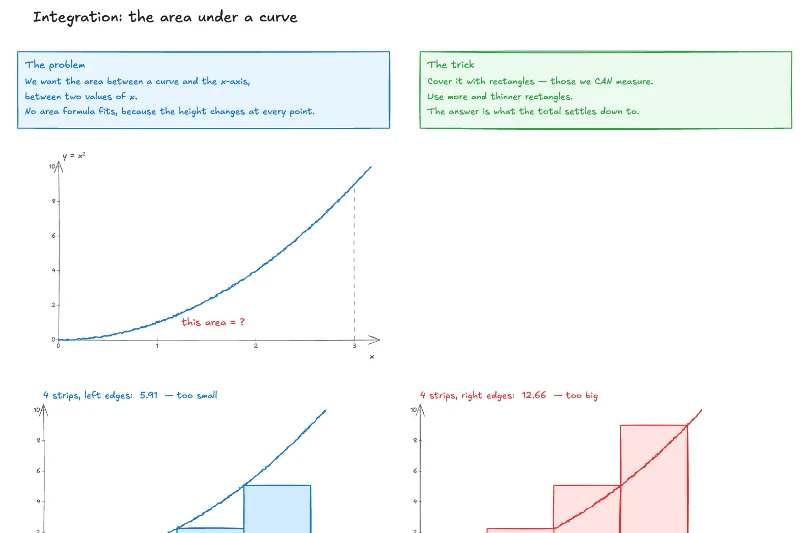
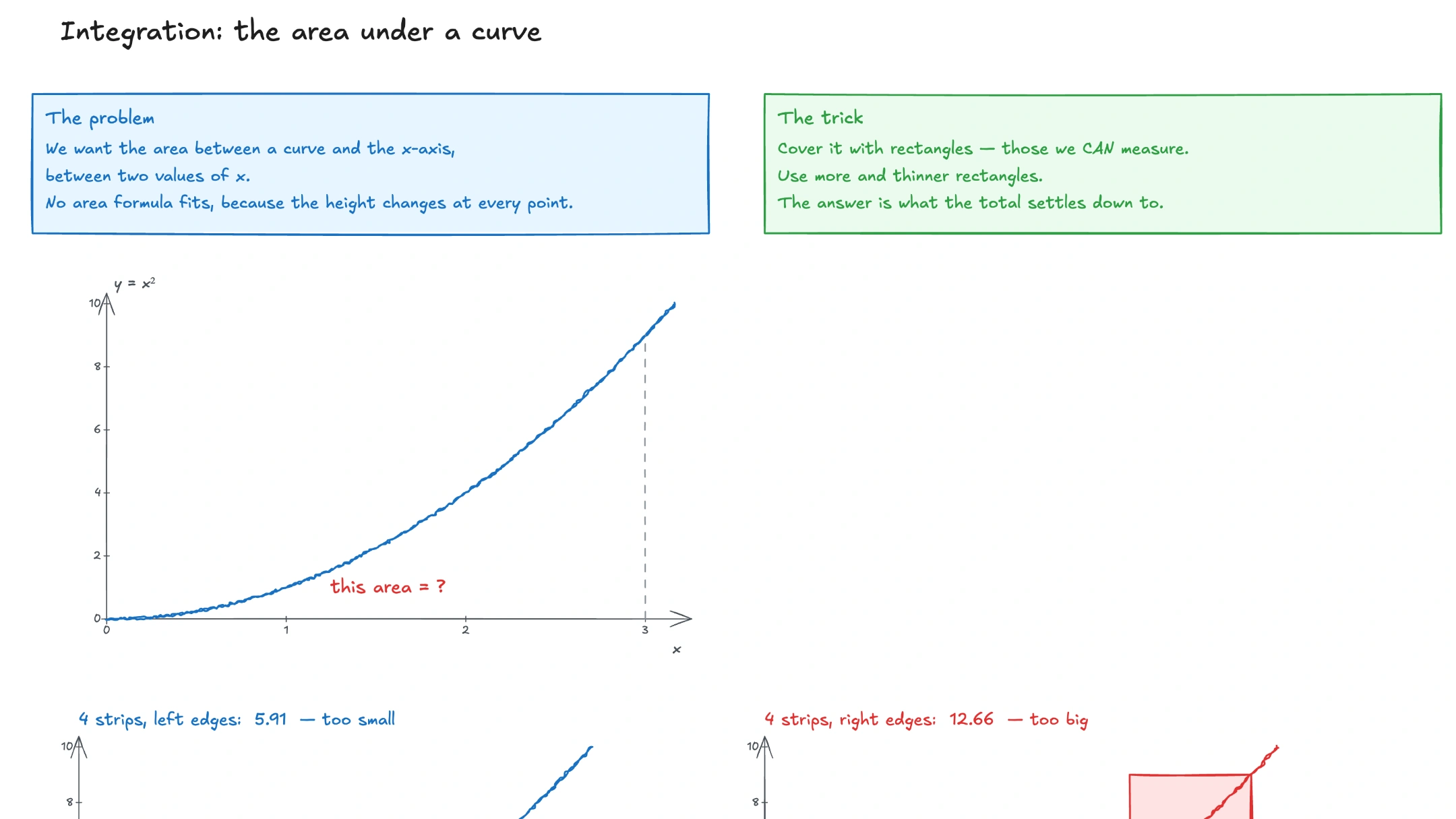
Try Active Learning with Our Integration Lesson
Play this complete interactive lesson free—drawn and narrated from start to finish. Or enter your own homework problem to get 5 lessons free.