How to Choose a Visual AI Tutor for Math and Science
A practical checklist for choosing a visual AI tutor that explains math and science with diagrams, spoken reasoning and step-by-step teaching.
Read the guideVisual, step-by-step guides to learning math, physics and chemistry — plus practical advice for using AI as a tutor without turning it into an answer machine.

A practical checklist for choosing a visual AI tutor that explains math and science with diagrams, spoken reasoning and step-by-step teaching.
Read the guide
See how a drawing AI tutor differs from a chatbot, a generated image and a recorded lesson when teaching math, physics and chemistry.
Read the guide
A simple study routine that turns an AI explanation into active learning through prediction, pause points, follow-up questions and verification.
Read the guide
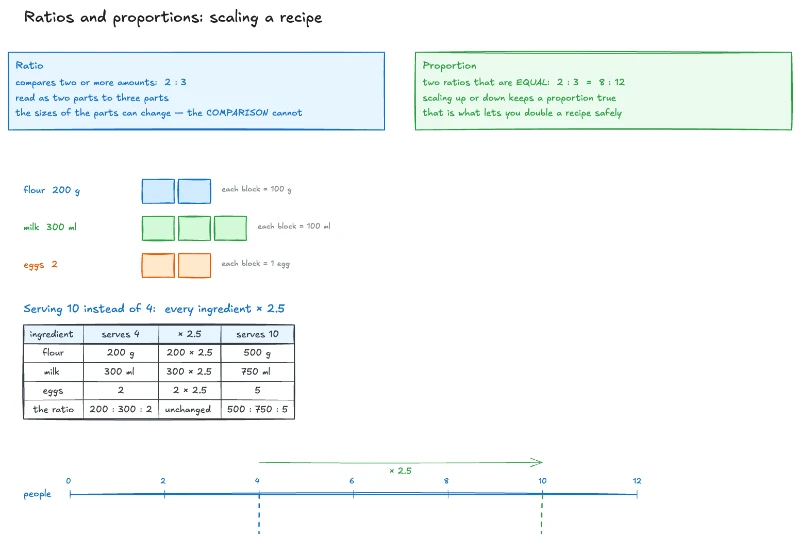
Understand equivalent ratios, scale factors and missing values with tables, diagrams and a recipe example instead of memorizing cross-multiplication.
Read the guide
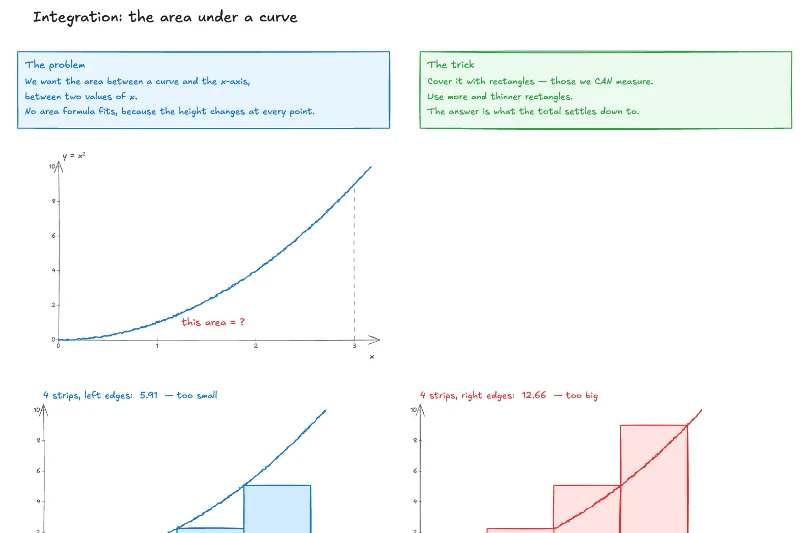
Build the definite integral visually from rectangle approximations and understand width, height, limits and signed area.
Read the guide
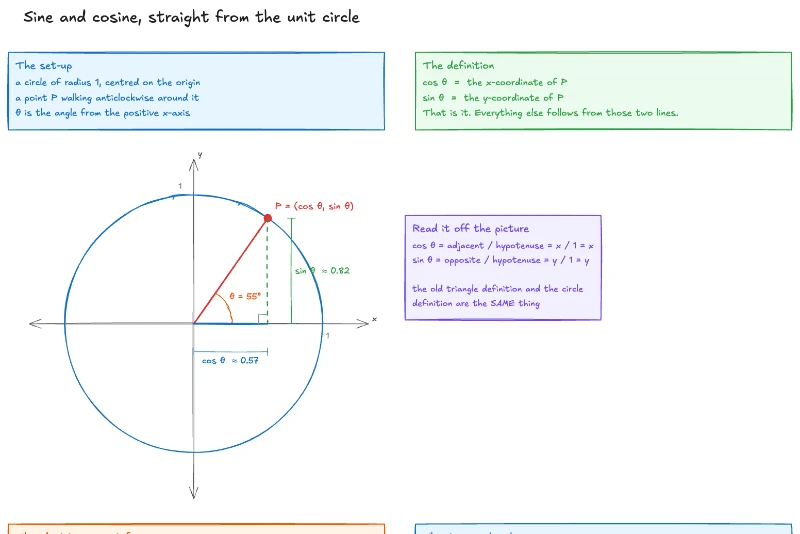
See why cosine is the x-coordinate, sine is the y-coordinate and signs change by quadrant on the unit circle.
Read the guide
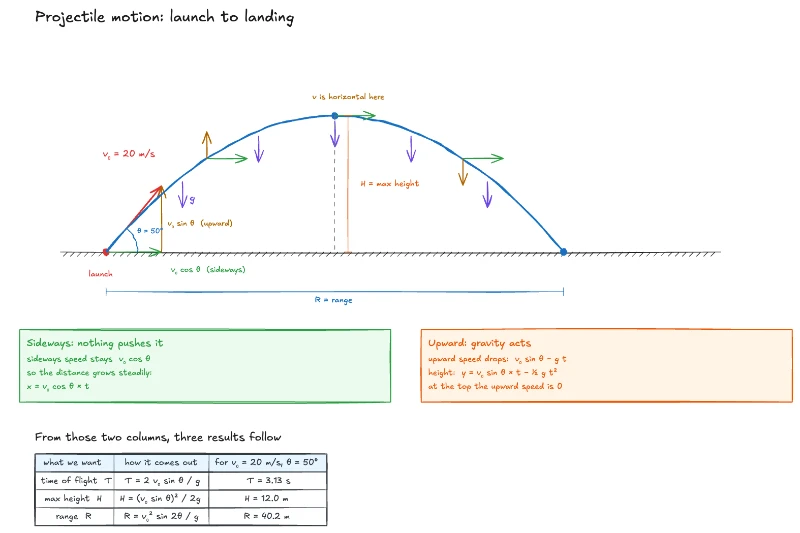
Understand projectile motion by splitting launch velocity into horizontal and vertical components, then deriving time, height and range.
Read the guide
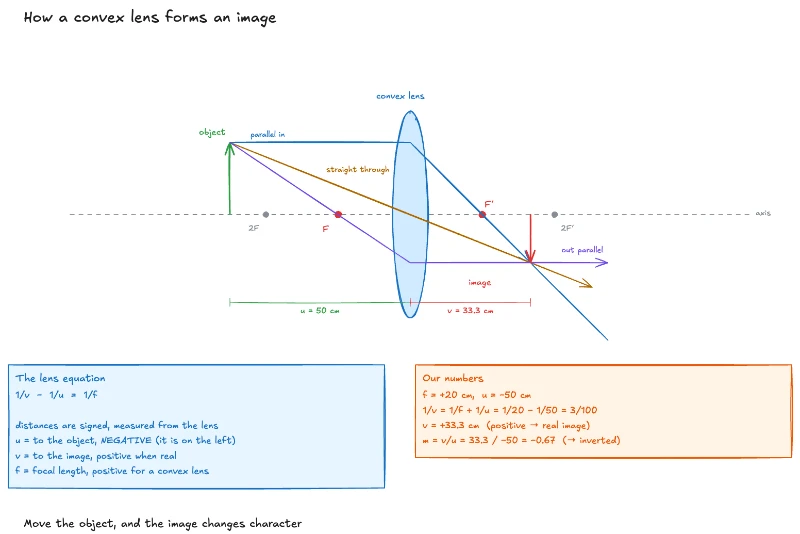
Learn the three principal rays for a convex lens and use their intersection to predict image position, size and orientation.
Read the guide
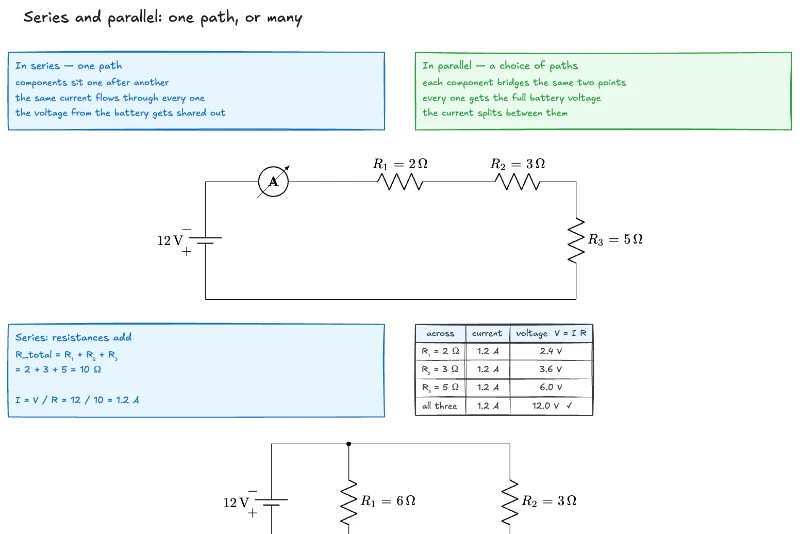
See why current stays the same in series, voltage stays the same across parallel branches and total resistance behaves differently.
Read the guide
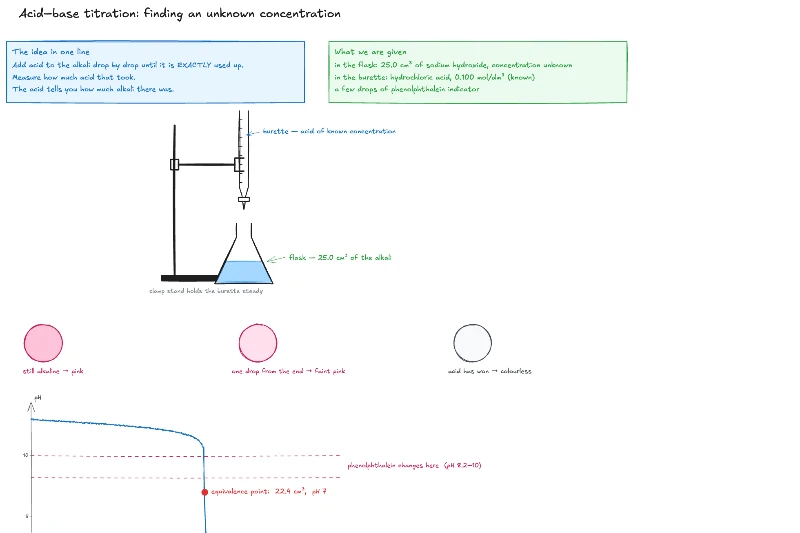
Understand the titration setup, the difference between endpoint and equivalence point, and what each region of a titration curve means.
Read the guide
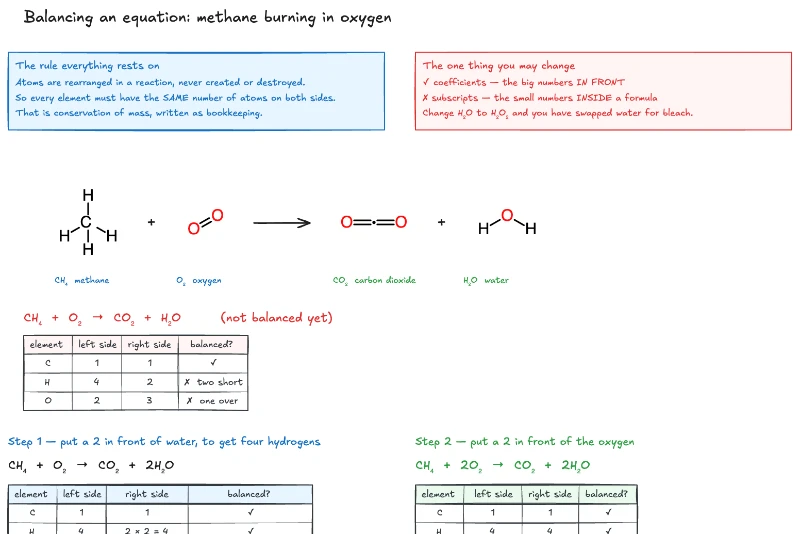
Balance chemical equations by counting atoms, changing coefficients and checking the result without altering chemical formulas.
Read the guide
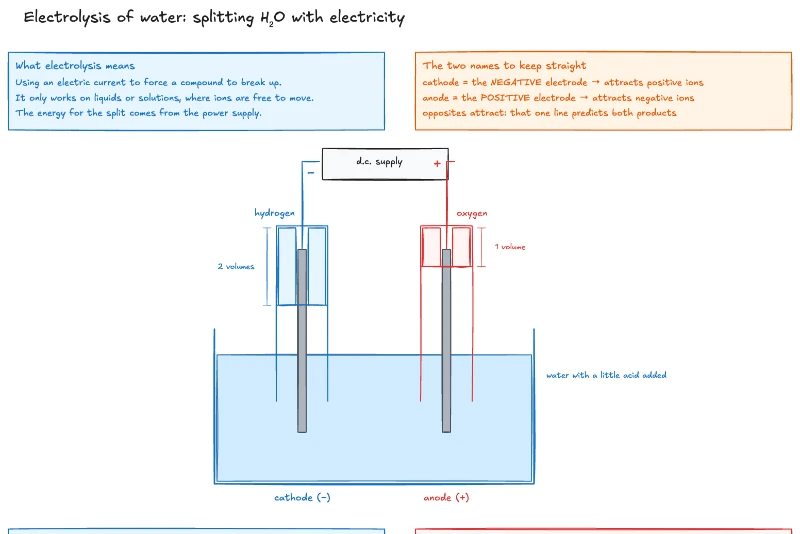
Follow electrons, ions and gas formation through a labeled water-electrolysis diagram and understand the 2:1 gas-volume ratio.
Read the guide