Why I Built Claryfied: Why Visual AI Tutoring Beats Walls of Text
Missing weeks of school after a health injury exposed how frustrating self-study is. YouTube videos are fragmented, and chatbots dump overwhelming walls of text. Here is why I built Claryfied—and how visual AI tutoring changes studying at home forever.
Level: All Levels / STEM & Independent Learners
In this guide
Quick answer
Claryfied was born out of personal necessity after a health injury caused me to miss weeks of classes, leaving me stranded with textbook pages and impenetrable walls of text from AI chatbots like ChatGPT, Gemini, and Claude. Text-first chatbots fail STEM learners because science and math are spatial, sequential disciplines that require visual intuition. Claryfied replaces passive walls of text with an interactive AI whiteboard tutor that draws diagrams stroke-by-stroke while explaining every step out loud—bringing the patient, step-by-step feel of a private 1-on-1 tutor to students studying at home.
The Wake-Up Call: Falling Behind After a Health Injury
A while back, an unexpected health injury forced me away from my classes for weeks. When you are sitting in a classroom every day, it is easy to take the rhythm of learning for granted. But when you are stuck in bed at home, watching the syllabus speed ahead without you, catching up feels like an insurmountable uphill battle.
I remember opening my textbooks, staring at pages of calculus derivations, electromagnetism equations, and organic chemistry mechanisms with a knot in my stomach. When you miss foundational lectures, reading static textbook paragraphs feels like deciphering ancient hieroglyphs.
Naturally, my first instinct was to turn to the internet. I scoured Google and combed through YouTube for hours. But you quickly hit a frustrating wall: YouTube does not have an answer for everything. You either find 45-minute generic university lectures where the professor spends half the time fiddling with the mic, or snappy two-minute recaps that gloss right over the crucial intermediate step where your understanding collapses. You cannot pause a YouTube video and ask, 'Wait, why did the normal force vector change direction here?' or 'How did we go from step 3 to step 4?'
The Chatbot Disillusionment: The 'Wall of Text' Problem
Desperate for targeted explanations, I turned to the cutting-edge AI tools everyone was talking about: ChatGPT, Gemini, and Claude. On paper, it sounded like the ultimate dream—an all-knowing AI assistant available 24/7 to answer my exact questions.
Yet within minutes of prompting them with my real homework problems, I ran straight into their fatal flaw: they gave me an overwhelming, impenetrable wall of text.
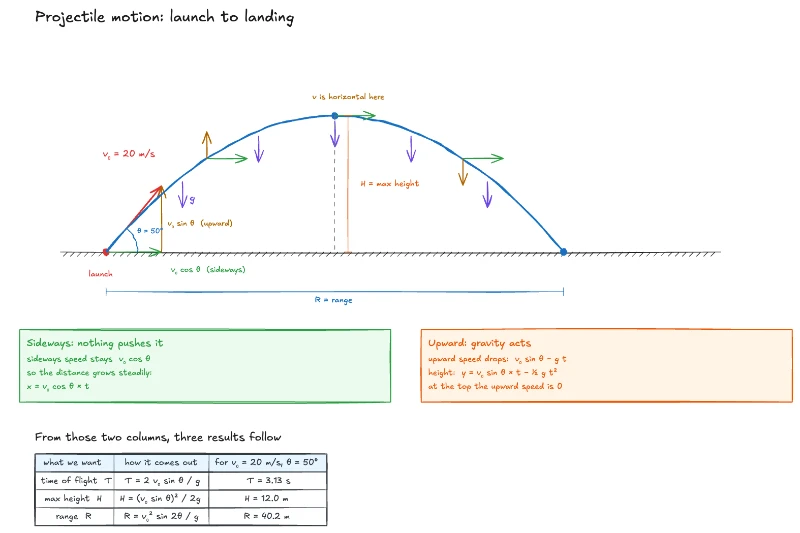
Math, physics, and chemistry are not text-first subjects. They are inherently spatial, geometric, and dynamic. Think about how your best teachers ever explained a challenging concept. They did not stand at a podium reading an 800-word essay out loud. They walked to the whiteboard, picked up a marker, sketched axes, drew arrows, labeled charges, and narrated their thought process stroke-by-stroke in real time.
When a chatbot dumps three scrollable screens of dense Markdown, bullet points, and raw LaTeX formulas, your brain is forced to mentally construct the 3D geometry and track invisible vector relationships in working memory. That cognitive overload exhausts your focus and leads right back to passive skimming or blindly copying answers without gaining genuine intuition.
From AI Skeptic to True Believer
At first, that disappointing experience made me skeptical about AI in education. It felt like another overhyped tech trend that produced neat parlor tricks but failed students when the stakes were high.
However, as I reflected on the problem, I realized something crucial: AI itself wasn't the issue—the interface was.
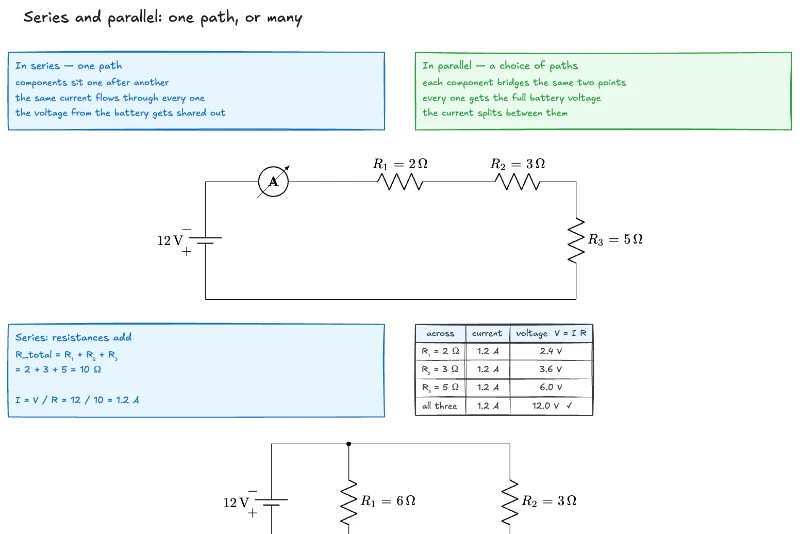
The underlying large language models already possessed encyclopedic knowledge of STEM principles, from Newton's laws to quantum mechanics. What was broken was the presentation layer. Text prompts and chat bubbles were built for code snippets and writing essays, not for teaching geometry, circuit analysis, or projectile motion.
AI is a revolutionary technology. When it is harnessed with the right pedagogical structure—combining spatial visuals, progressive reveals, and spoken voice guidance—it has the power to democratize world-class education and fundamentally change people's lives for the better.
Why Visual AI Tutoring Is the Best Way to Study at Home
Studying at home has always had a critical weakness: the moment you get stuck, your momentum dies. With traditional methods, you either wait days for an email reply from a teacher, spend hundreds of dollars on private tutoring, or surrender to text-heavy search results.
An interactive visual AI tutor completely flips the script by providing five key learning superpowers:
- Zero Judgment & Infinite Patience: You can ask the AI to re-explain why an angle is negative six different times in six different ways. There is no anxiety, no embarrassment, and no rushed timetable.
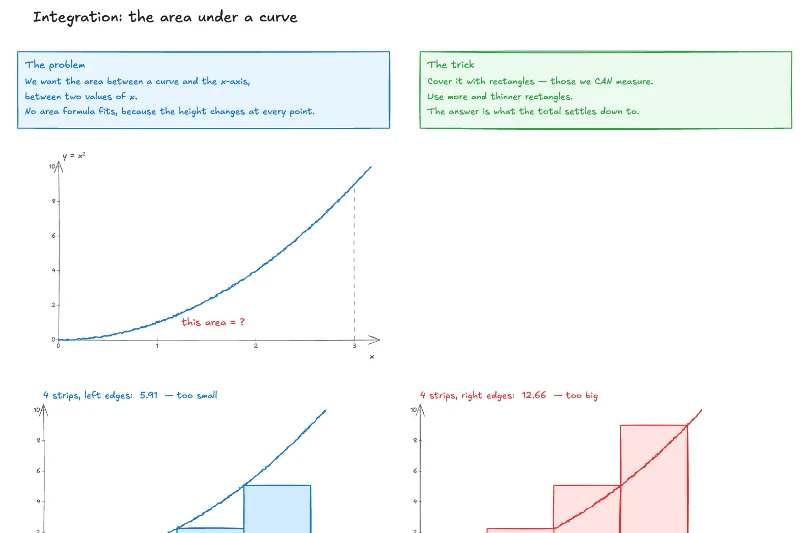
- Live Stroke-by-Stroke Drawing: Instead of flashing a completed diagram that feels overwhelming, Claryfied sketches axes, vectors, and apparatus sequentially on a clean Excalidraw whiteboard—mirroring the natural pacing of human thought.
- Synchronized Spoken Narration: Natural Kokoro voice audio talks through the physical intuition right as your eyes follow the marker across the canvas.
- Interactive Pause & Explore: You can pause the board at any second, examine formulas, click on annotations, and ask instant follow-up questions about that specific step.
- Focus on First Principles: Rather than just dumping final numeric answers to cheat on homework, Claryfied derives equations from fundamental laws so you build lasting intuition that carries you through exam day.
Why We Built Claryfied: Clarity for Every Student
I built Claryfied because no student should have to feel the helplessness of staring at a wall of text while trying to recover from an illness or catch up on difficult homework. We wanted to build the tutor we desperately needed when we were falling behind: patient, visual, articulate, and always ready to draw on the whiteboard.
Whether you are mastering projectile motion in AP Physics, tackling integrals in Calculus, or balancing redox reactions in Chemistry, Claryfied is here to help you see the idea clearly the first time.
We believe in this mission so deeply that every new student gets 5 complete interactive lessons completely free with no credit card required. Pick the toughest problem from your homework tonight, enter it into Claryfied, and watch the whiteboard come to life.
What to remember
- Missing classes due to injury revealed that search engines and YouTube cannot answer hyper-specific, multi-step STEM questions on demand.
- Standard LLMs (ChatGPT, Claude, Gemini) dump dense walls of text and abstract LaTeX that overload working memory instead of cultivating visual intuition.
- A real teacher teaches by picking up a marker and drawing on a whiteboard; Claryfied recreates this with stroke-by-stroke visual diagrams and synchronized voice narration.
- Learning research consistently favors pairing a diagram with a spoken explanation over reading text alone—the combination Claryfied is built around.
- An AI tutor makes patient, self-paced, one-on-one help available to students at home, without judgment and at a fraction of the cost of private tutoring.
Frequently asked questions
Why did you build Claryfied instead of just using ChatGPT, Gemini, or Claude?
General LLMs like ChatGPT, Gemini, and Claude are incredible text generators, but STEM subjects cannot be learned effectively through walls of text. When you ask them a physics, math, or chemistry question, they output dense paragraphs and detached equations that create cognitive overload. Claryfied was built specifically to replicate the experience of a great teacher drawing step-by-step on a whiteboard with synchronized voice explanations.
How does visual learning compare to reading text answers for STEM?
Research on multimedia learning has long found that students tend to understand and remember more when a diagram is paired with a spoken explanation than when they read text alone. STEM subjects lean heavily on spatial and geometric intuition, which a well-drawn picture conveys far more directly than paragraphs of text.
Can an AI whiteboard tutor really replace or match a human tutor?
One-on-one tutoring has long been one of the most effective ways to learn—Benjamin Bloom's well-known studies found that tutored students did markedly better than their classroom peers. Claryfied isn't a replacement for a great human tutor, but it brings several of the same qualities—individualized pacing, patience, step-by-step visual explanations, and instant answers to follow-up questions—to any student, for a fraction of the cost of private tutoring.
How does Claryfied help students who have fallen behind due to illness or absences?
When you miss classes, textbooks and YouTube videos often leave critical knowledge gaps. Claryfied allows you to enter your exact curriculum questions and receive complete, step-by-step whiteboard derivations from first principles. You can pause, rewind, and ask as many follow-up questions as you need without feeling rushed or judged.
Turn your own question into a visual lesson
Ask any math, physics, or chemistry problem. Claryfied draws it on an interactive board and explains every step out loud. New accounts get 5 full lessons free with no credit card.